
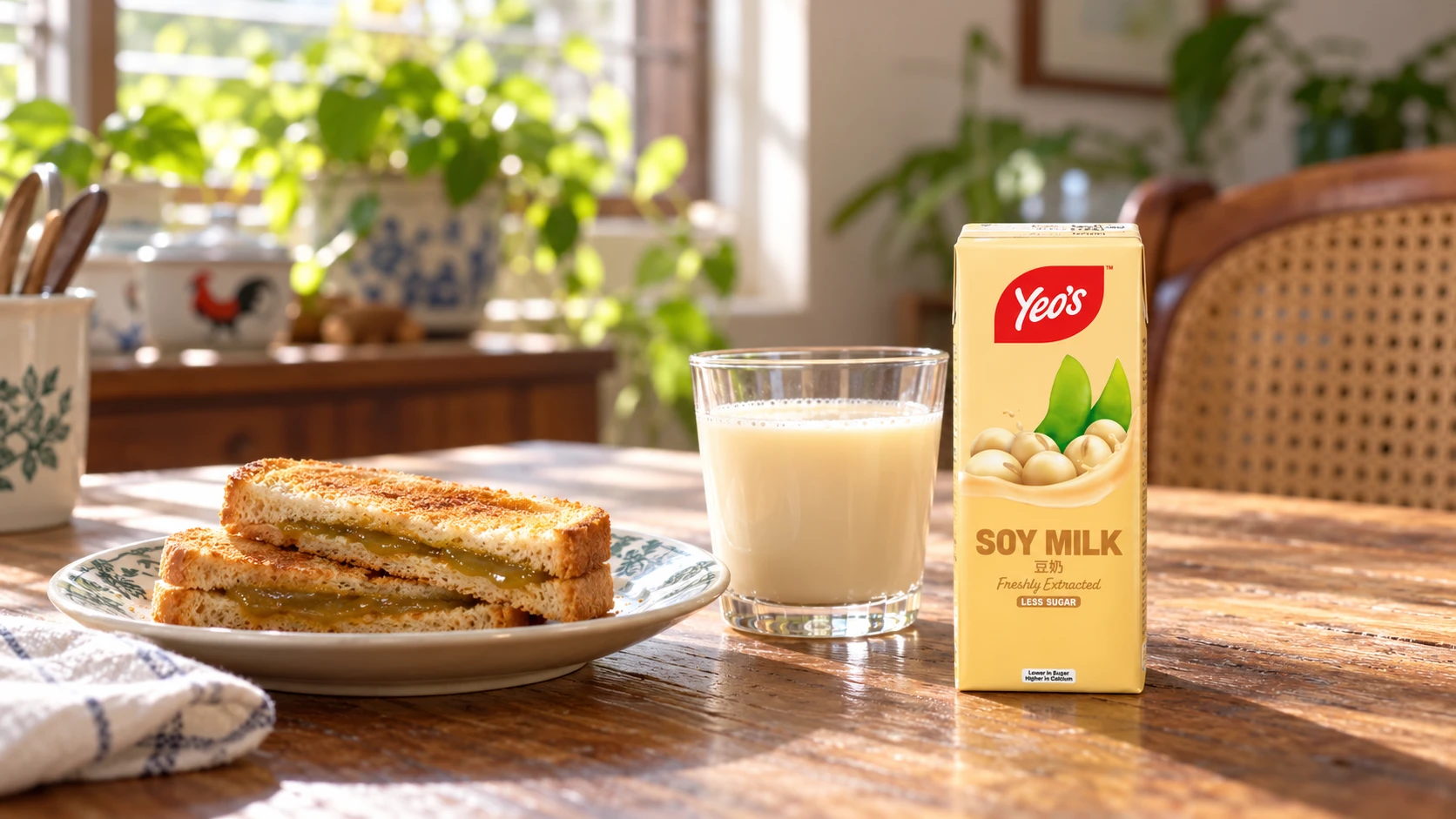
Yeo’s Soya Bean Drink is a useful way to explore how a familiar grocery product becomes part of everyday life. The small yellow carton connects a long regional food business with Malaysian manufacturing, changing drink preferences and a new round of operational investment. Its story reaches well beyond the moment someone picks it up for breakfast or an afternoon break.
For today’s product spotlight, we look at Yeo’s soya in Malaysia: its history, recent developments and the company’s announced direction. The central product is the 250ml carton listed by Trader Max. The corporate plans discussed concern Yeo Hiap Seng’s wider operations; they are not a promise of a new recipe or launch date for this exact carton. This article reflects sources available on 20 October 2026.
The familiar product: Yeo’s soya in a 250ml carton
Trader Max lists Yeo’s Soya Kotak 250ml × 24 pieces. The catalogue photograph shows the yellow carton, red Yeo’s mark and soybean illustration. These visual details help identify the line, but buyers should still match the description and barcode on the actual supplied pack.
Yeo’s Malaysian Soy Bean Milk product page describes its drink as freshly extracted, a source of protein, lactose-free, suitable for vegans and made without added preservatives. It also states that it contains 40% less sugar than its original recipe. That comparison is with the manufacturer’s original recipe; it does not mean the drink is sugar-free or that it contains 40% less sugar than every competing product.
For a shopper, the practical starting point is the current label: ingredients, serving size, nutrition information and storage directions. For a retailer, it is the complete product identity: variant, volume and selling unit. “Yeo’s soya” is a useful everyday name, but it is not sufficiently precise for a purchase order when several soy products share the brand.
From a soy-sauce business to a packaged drink
The manufacturer’s Malaysian milestone timeline traces the business to Yeo Keng Lian’s soy-sauce enterprise in Zhangzhou, China, in 1901. It records a Singapore partnership in 1935, expansion into Malaysia in 1942, bottled soybean milk and chrysanthemum tea in 1953, and a Petaling Jaya canning plant in 1959. A further milestone in 1967 was the use of Tetra Brik aseptic packaging and UHT processing for Asian drinks.
That sequence is more informative than treating the company’s founding year as the birthday of the carton on today’s shelf. The business began with sauces, diversified into beverages and changed the way those beverages were packaged. The current 250ml pack belongs to that evolving story; the historical dates do not establish that its design, size or formula has stayed unchanged for decades.
The interesting connection is how an established ingredient could support very different eating and drinking occasions. Soy sauce belongs in cooking and seasoning; a soya drink is a separate product with a different purpose. A shared ingredient and brand heritage do not make their production, composition or use interchangeable.
Why packaging belongs in the history
A product’s history is often told through its recipe or advertising, yet the container also matters. A single-serving carton is something a shop can count, price and hand to a customer individually. It also gives the manufacturer a defined space for the product name, ingredients, date coding and handling instructions.
Consider an illustrative breakfast occasion: one customer wants a drink alongside toast, while an office buyer wants a carton of individual servings for a meeting. Those are different buying decisions even if both involve the same product. The customer considers one serving; the office buyer also considers headcount, spare servings and how the remaining packs will be stored.
This is why the change from a beverage sold in one format to a range of packaged options deserves attention. It helps explain the commercial role of the pack without requiring a claim that packaging alone caused the brand’s growth. Distribution, taste, availability and the customer’s own preferences remain part of the picture.
Malaysia’s role extends beyond the shop shelf
Yeo’s Malaysian corporate profile describes Malaysia as a manufacturing centre serving its international distribution network, including markets such as Australia, New Zealand, Europe and the United States. This gives the local story two sides: Malaysian consumers buy the products, while Malaysian operations also contribute to the wider business.
For readers interested in local manufacturing, that distinction matters. A brand may have regional origins and still maintain substantial operations in Malaysia. Equally, a group announcement can cover more than one country. The location named in a factory or distribution announcement should be checked before treating it as news about Malaysian production.
For a shop owner, the manufacturing story provides context rather than an order confirmation. The useful commercial questions remain specific: which item can be supplied, in what quantity, on what terms and for which delivery location? A broad export footprint cannot answer those questions on behalf of a local wholesaler.
Recent developments: a wider soy range
The current Yeo’s Malaysia product directory lists Soy Bean Milk alongside Black Soy Milk, Brown Sugar Soy Milk, Immuno Original and Chocolate Soy Milk, and Super Sprouts Original and Chocolate. The familiar carton therefore sits within a broader soy offering rather than representing the entire category.
The 2026 manufacturer catalogue also presents Super Sprouts in Original, Chocolate and Strawberry, with 200ml packs. This is evidence of the range shown in that catalogue, not a claim that all those products were first launched in 2026. Nor does a manufacturer listing establish that every variant is currently stocked by Trader Max.
Our interpretation is that this wider assortment gives the brand more ways to address taste and serving preferences. A classic soya carton, a flavoured product and a smaller pack may compete for different occasions. The sensible comparison begins with their actual labels and formats, rather than assuming that one brand name implies identical ingredients or nutrition.
Retailers can apply the same logic to shelf planning. Start with a clear role for each line: an established everyday seller, a flavour customers have requested, or a limited trial. That produces a more useful assortment than adding several similar-looking packs without knowing what each one contributes.
What changed in the business during 2025?
The 2025 annual report describes a difficult trading environment, including strong price competition in Malaysia. It also records completion of the group’s SAP S/4HANA implementation and a three-year strategic plan aimed at improving operations. Management identified supply-chain changes, productivity and cost discipline as areas of work.
These developments are less visible than a new flavour but help explain the company’s direction. A business system concerns how information moves through an organisation. A product launch concerns what customers can buy. Both may matter to the same company, yet they should not be confused with an immediate change in the drink inside an existing pack.
For this article, the operational developments are background to the next chapter of the brand. They do not establish that a retailer’s delivery service has improved, that the shelf price will fall or that a particular product is available without interruption. Those outcomes need their own evidence.
The newer update: first-half 2026 growth
Yeo Hiap Seng’s 7 August 2026 results release reports group revenue of S$159.8 million for the six months ended 30 June, up approximately 8% year on year. Its Yeo’s food-and-beverage revenue increased approximately 9% to S$152.7 million. The release identifies Malaysia among the markets supporting growth, alongside Singapore, Cambodia and Australia.
Those figures provide a more recent business update than the preceding annual report. They are group measures in Singapore dollars, not Malaysian soya-carton sales. The company also reported continued work on productivity, procurement savings, product mix and cost control. It is therefore reasonable to describe an improving revenue picture while keeping the exact scope of the figures clear.
A retailer can use this news to understand the supplier’s broader environment. For ordering, however, the stronger evidence is still the outlet’s own sales history. If an individual line moves slowly, a positive group result is not a reason to increase that line automatically.
Future plans in Malaysia: upgrade existing operations
The clearest Malaysia-specific direction appears in the 29 April 2026 AGM minutes. Management described phased upgrades and consolidation of existing Malaysian operations, replacing older machinery while retaining usable assets. At that meeting, planned capital expenditure was expected to remain below RM100 million. Potential new developments on existing West Malaysian land were longer-term options, not confirmed factory openings.
The same minutes record that a can manufacturing line had been relocated from Singapore to Malaysia. They also describe strategic initiatives being implemented from 2026 onwards, with product innovation and stronger distribution among the priorities. These are wider business developments; the can-line move should not be presented as a new production line for the 250ml carton.
For Malaysian readers, the key distinction is between upgrading an existing operation and announcing a completely new plant. The former can involve a sequence of machinery and process changes. The latter needs a defined site, approvals, construction and an operating timetable. The sources reviewed do not provide a new factory opening date for this soya product.
What the next chapter could mean for the product
Our interpretation is that Yeo’s challenge is to keep a recognisable core product relevant while offering enough variety for changing preferences. A long history is useful background, but customers still judge the item they can buy today: its taste, pack, label, price and availability.
There are several concrete developments worth watching. Does the manufacturer introduce a clearly documented Malaysian variant? Does a packaging update change serving size or handling? Do published operational updates confirm completion of the announced upgrades? These questions turn a broad discussion of the future into things a buyer can actually verify.
There is no need to predict an unannounced flavour or promise a cheaper carton to make the story interesting. The documented direction already connects manufacturing, product selection and distribution. Later announcements can add detail; until then, the distinction between an announced intention and a completed result keeps the article useful.
How retailers can turn the story into a better buying decision
Begin with the product your customers already recognise. Record its exact name and pack size, then check recent sales over a period that reflects normal trading. Separate special-event purchases from regular demand so a one-off large order does not distort the next replenishment decision.
For example, a meeting order for 48 individual cartons could be fulfilled by two cases if the confirmed case contains 24 units. That is an illustrative quantity calculation, not a recommended minimum order. The buyer still needs to check the actual quotation, packing and availability before placing the order.
Next, decide whether another format serves a distinct need. Trader Max separately lists Yeo’s Soya in 300ml cans. A can and a carton should be separate stock records, even when customers use the same shorthand name for both. Keep the volume, barcode and quoted unit clear when comparing them.
Finally, connect purchasing to the store’s routine. Confirm the incoming quantity, inspect packaging and dates at receipt, and rotate stock consistently. For a fuller process, use our mini market inventory and reorder-point guide. Product history can support a conversation with customers; accurate stock records support the buying decision.
Questions readers often ask
Did Yeo’s start as a soya-drink company?
The Malaysian company timeline begins with a soy-sauce business and later records the move into beverages. That is why the company’s origins and the history of the soya drink should be discussed separately. The modern carton is part of a continuing product story.
Does “less sugar” mean sugar-free?
No. The comparison on the manufacturer’s product page is against its original recipe. Read the current pack’s nutrition panel for the exact product and serving size. Avoid treating different soy variants as nutritionally identical simply because they share the Yeo’s name.
Is there a confirmed new Malaysian factory for this carton?
The sources reviewed describe phased improvements to existing operations and longer-term options. They do not establish a confirmed new factory opening for the featured 250ml pack. A future dated announcement would be needed before making that claim.
Should a shop stock every soy variant?
Choose according to customer demand, available shelf space and confirmed supply. A small, clearly measured trial can help evaluate a new line. Keep the established item available while assessing the trial, and review actual sales before expanding the range.
A familiar carton with an evolving Malaysian story
Yeo’s soya connects regional food heritage with a Malaysian manufacturing presence and current efforts to improve products and operations. For shoppers, it remains a specific drink to evaluate on its own merits. For retailers, it is also a reminder that the useful story combines brand context with precise product information.
Contact Trader Max for a Yeo’s quotation with your preferred format, quantities and delivery location. Confirm current availability, case packing and applicable order terms with the team.
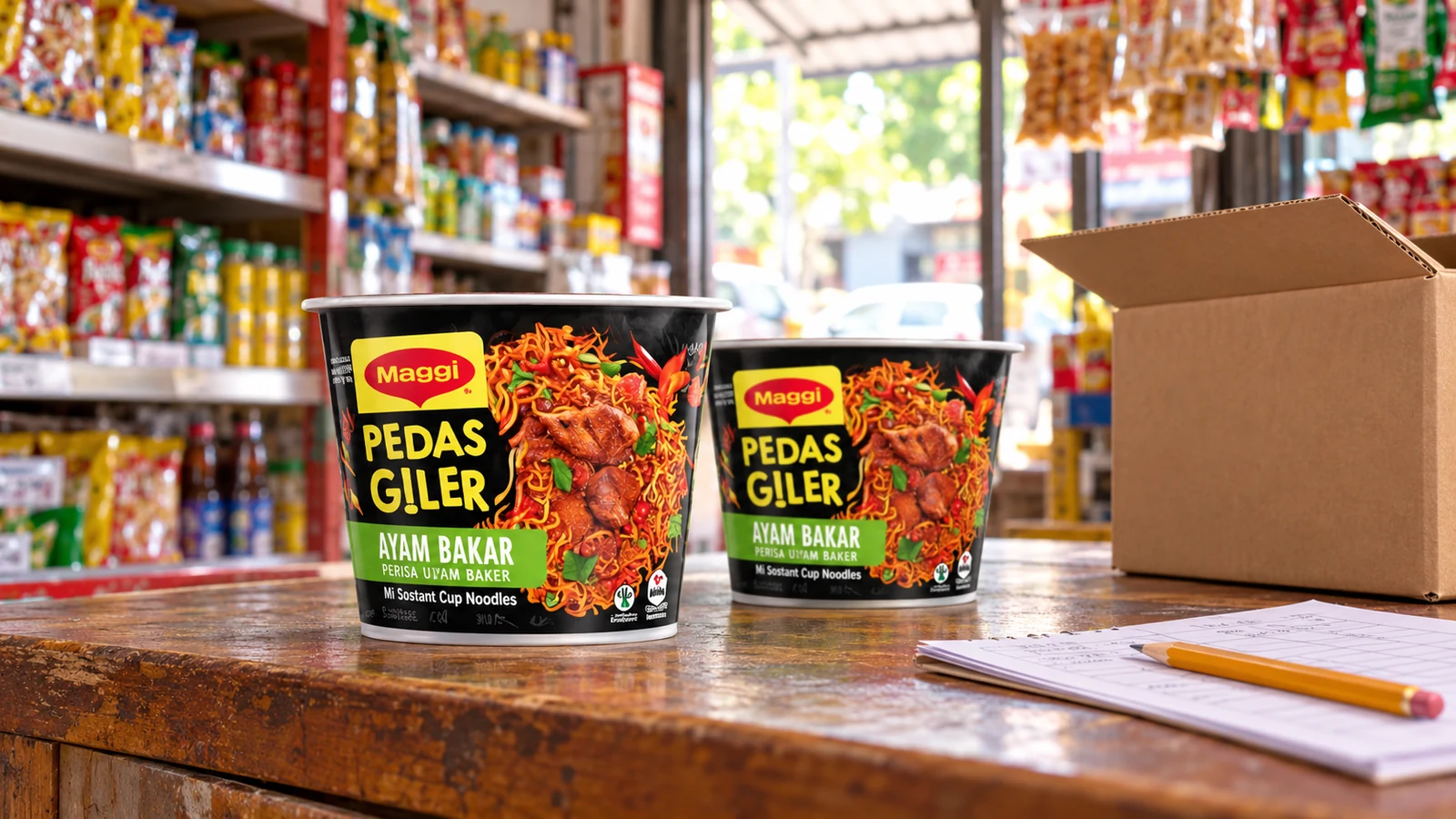
Editorial note: researched on 20 October 2026 using the linked manufacturer and exchange publications. The lifestyle cover is AI-assisted using a real catalogue product photograph as its packaging reference; supplied packaging may differ.

Leave A Comment