
A useful wholesale beverage quote request includes the exact product, flavour, bottle or can size, pieces per carton, requested carton quantity and delivery location. Add your preferred receiving date, substitution preferences and questions about applicable charges. Ask the supplier to identify unavailable lines and confirm the quotation’s validity before you make a purchasing decision.
For Malaysian mini markets, kedai runcit, cafés and food stalls, the goal is a reply that can be checked against the same product list. A short but complete request helps distinguish a quoted carton from a pack, a preferred date from an agreed delivery, and an alternative product from the original item.
This guide provides a copyable request, an illustrative completed example and a method for checking replies. It does not establish Trader Max’s current prices, stock, delivery coverage, minimum orders or payment terms. Ask the team to confirm those details for your own enquiry.
Prepare a product list before asking for prices
Use one line per distinct SKU. A brand name alone can cover several flavours, individual sizes and carton formats. If you want a particular product, include its full description and the supplier’s product code where available. A readable description helps catch an incorrectly copied code.
Begin with the beverages catalogue to identify potential products. Treat a listing as a reference for your enquiry, then ask about the exact current format and availability. A catalogue page does not reserve stock or confirm that your requested quantity can be supplied on a particular date.
Write the individual volume and packaging type separately from the outer quantity. For example, “generic orange drink, 250ml can, 24 cans per carton” is clearer than “orange drink carton.” Use actual verified details in your request; the example here describes no specific stocked product.
If the pack count is uncertain, mark it “please confirm” instead of filling in a familiar number. An honest blank can be resolved. An incorrect carton conversion may survive into your purchasing sheet, selling-price calculation and receiving record.
State the quantity and its unit clearly
Say whether you want cartons, packs, bottles or cans. If your intended order is six cartons, write “6 cartons” rather than “6 units.” Where useful, include the expected total pieces based on the stated pack count, so the supplier can flag a mismatch.
Keep a requested quantity separate from a possible larger quantity. You might ask for a quotation for four cartons and a separately identified alternative for six. Do not place both quantities in the same line without explaining whether they are alternatives or additional items.
For an unfamiliar format, explain the intended selling or serving unit. A retailer selling individual cans needs to understand the carton contents; a café preparing event service may be planning by servings. This context helps clarify the request without requiring the supplier to guess your conversion.
Use your own stock and sales records to decide the quantity. Asking for a quotation is not a reason to increase the order until it reaches an assumed discount threshold. Request any applicable quantity conditions, then assess whether the resulting amount fits your demand and storage.
Give the delivery location and receiving requirements
Include the town and postcode in the initial enquiry, followed by the full delivery address when needed to confirm arrangements. Identify the branch if your business has more than one outlet. A quotation intended for one shop should not silently become the basis for another location.
State your preferred delivery date and receiving hours as requests. Ask the supplier to confirm what is available. A requested date does not become an agreed appointment just because it appears in your message, and a broad service-area description does not settle the arrangements for your order.
Flag relevant access conditions such as stairs, a narrow loading area or building receiving restrictions. Ask which handling arrangements can be supported. Avoid assuming that every delivery includes particular equipment, an upstairs carry or a fixed waiting period.
Provide the name or role of the person who will handle quotation questions. If the receiver is a different employee, share the appropriate receiving contact when confirming the order. Keep unrelated personal details out of the enquiry; send the information needed to identify the business and fulfil the request.
Decide how you want substitutions handled
Specify whether alternatives are welcome, and make clear that they should be quoted separately. A different flavour, bottle volume or carton count may be acceptable, but it changes the product you are comparing. An alternative should not replace the original description without your awareness.
A useful instruction is: “Please list unavailable items and quote any alternatives separately for approval.” If you only want exact matches, say so. This gives the supplier a clear boundary while keeping your purchasing decision with the person responsible for the order.
When reviewing an alternative, compare individual size, piece count, packaging and intended use. Two cartons with the same outer dimensions can contain different quantities. Keep the offered alternative on its own row so its price cannot accidentally be assigned to the original SKU.
Copyable wholesale beverage quote request template
Copy the template below into an email or message and replace the bracketed fields. Remove lines that do not apply, but retain the product details, quantities and location. The wording requests information; it is not an instruction to dispatch goods.
Hello, I would like a wholesale beverage quotation for [business/shop name] in [town, postcode]. This is a quotation request for review.
Product list
1. [Product/brand and variant] — [individual size and packaging] — [pieces per carton, or please confirm] — [requested quantity and unit].
2. [Product/brand and variant] — [individual size and packaging] — [pieces per carton, or please confirm] — [requested quantity and unit].
3. [Add another line if required].Delivery request
Location: [town, postcode and relevant address details].
Preferred date: [date, subject to confirmation].
Receiving hours/access notes: [relevant details].Substitutions
[Exact products only / please quote alternatives separately for approval]. Please identify any unavailable or partially available quantities.Please confirm
Price and quoted unit for each line; pack count; available quantity; any applicable minimum order; delivery and other applicable charges; whether taxes are included where applicable; payment arrangements; expected delivery timing; quotation validity; and how to proceed if we accept.Contact for questions: [name/role and preferred contact method]. Thank you.
If the list is long, attach a clearly labelled spreadsheet with the same fields and include a short message describing the location and requested timing. Give the file a version or date. Avoid sending several nearly identical lists without identifying which one supersedes the others.
Illustrative completed request for a small retailer
The following example uses a fictional shop, generic products and invented pack quantities. It is not a quotation, product recommendation or statement of availability. Replace every product and location field with information relevant to your business before sending a real request.
Hello, please quote for Example Mini Market in Klang. We will provide our full address and postcode to confirm delivery availability before accepting an order.
1. Generic orange drink, 250ml cans, assumed 24 cans per carton: 4 cartons. Please confirm the pack count.
2. Generic canned coffee, 240ml cans, assumed 24 cans per carton: 2 cartons. Please confirm the pack count.
3. Generic drinking water, 500ml bottles, assumed 24 bottles per carton: 3 cartons. Please confirm the pack count.Our preferred receiving day is 16 October 2026, between 10am and 2pm, subject to your confirmation. Please confirm delivery availability after we provide the address. The shop has a ground-floor entrance; please advise if further access details are needed.
Please quote alternatives separately for approval. Identify any unavailable quantities, and confirm prices per carton, pack counts, applicable charges, minimum order conditions, payment arrangements, quotation validity and the next step if we accept. This is a request for a quotation, not a dispatch instruction.
With the assumed packing, this example asks about 96 orange-drink cans, 48 coffee cans and 72 water bottles. Those totals are cross-checks, not verified product specifications. If the supplier confirms a different count, revise the quantities and review the offer again before treating it as comparable.
Check each reply against the original request
Start with product identity before comparing totals. Match the description, individual size, packaging and pieces per quoted unit. Mark each line as an exact match, an alternative or unresolved. A lower price attached to a different pack is not yet a like-for-like comparison.
Next, check the quantity offered. A reply may cover fewer cartons than requested or omit a line entirely. Record the available amount and ask what happens to the balance. Do not assume an omitted item is free, unavailable or scheduled for later delivery without confirmation.
Then check which charges are included. Request clarification on delivery, other applicable charges and tax treatment where relevant. Record whether an amount applies per carton, per order or under another stated condition. Keep unresolved charges visible instead of entering zero as a placeholder.
Finally, confirm validity and timing. Note the date until which the quotation is offered and any stated availability conditions. If your decision is delayed or your requested delivery changes, ask whether the quotation still applies. Save the supplier’s updated response with the same enquiry reference.
A simple reply-checking table
| Field | What to check | If unclear |
|---|---|---|
| Product identity | Same variant, individual size and packaging | Request the exact offered description |
| Pack structure | Pieces per quoted carton or pack | Ask for the conversion before comparing |
| Quantity | Requested versus quoted and available | Clarify partial supply and remaining lines |
| Charges | Line prices and applicable order charges | Ask what is included and conditional |
| Delivery | Confirmed location and proposed timing | Keep requested timing marked as pending |
| Validity | Offer period and stated conditions | Ask whether the offer remains current |
For broader product-selection context, use the wholesale beverages buying guide for Selangor retailers. Keep this quotation worksheet focused on the actual reply rather than adding assumptions from general guidance.
Ask one clear follow-up for missing information
Consolidate unresolved questions into a short numbered reply. Reference the quotation date or number and the affected lines. This is easier to reconcile than separate messages about carton counts, timing and charges that different staff may answer without seeing the full context.
For example: “For line 2, please confirm whether the quoted amount is for one carton of 24 cans. For the full order, please confirm the delivery charge to our postcode and whether the preferred receiving date is available.” This identifies the missing facts without implying that you have already approved the order.
If you revise a quantity, state the new total rather than only the difference. “Please revise line 1 from four cartons to six cartons and issue an updated total” is clearer than “add two.” Ask whether that revision changes any applicable conditions or delivery arrangements.
Keep the accepted quotation separate from the enquiry
Once you decide to proceed, follow the supplier’s confirmation process and retain the accepted product list and terms. A quotation request, a supplier reply and a final order confirmation are different records. Label them so your receiver does not prepare for every alternative that was merely discussed.
Give the receiving team the latest accepted version, including approved substitutions and partial quantities. For the next stage, see the order-to-delivery checklist. Clear quotation details should carry through to the goods your shop expects to receive.
Keep one person responsible for updating the enquiry record, with a backup when necessary. Staff can contribute questions, but avoid multiple versions circulating as the final order. Date the accepted copy and retain the relevant clarification messages so a later discrepancy can be traced to the agreed details.
Frequently asked questions
Can I ask for a quotation before choosing every product?
Yes, but distinguish an exploratory enquiry from a final product list. State the beverage types, intended use and approximate requirements, then request available options. Exact price comparisons need confirmed product descriptions, pack counts and quantities.
Is a product photo enough for a quote request?
A clear photo can help identify a product, but add the written size, variant and requested quantity. Similar packaging can represent different formats. Ask the supplier to confirm the exact item rather than relying on an image alone.
Should I ask for price per carton or per piece?
Ask for the supplier’s actual quotation unit and its piece count. You can then calculate a comparable per-piece figure where useful. Keep the quoted unit visible so the purchasing quantity and the comparison calculation do not get mixed up.
Does receiving a quotation reserve the stock?
Do not assume it does. Ask about availability, validity and the steps required to confirm an order. If reservation arrangements matter, get a clear answer for your request before relying on the goods for a planned event or replenishment.
Send a clear beverage quotation enquiry
Prepare your exact product list, quantities, location and preferred timing, then send Trader Max your beverage quotation request. Ask the team to confirm available formats, current pricing and the arrangements applicable to your order so you can review a clear, complete reply.
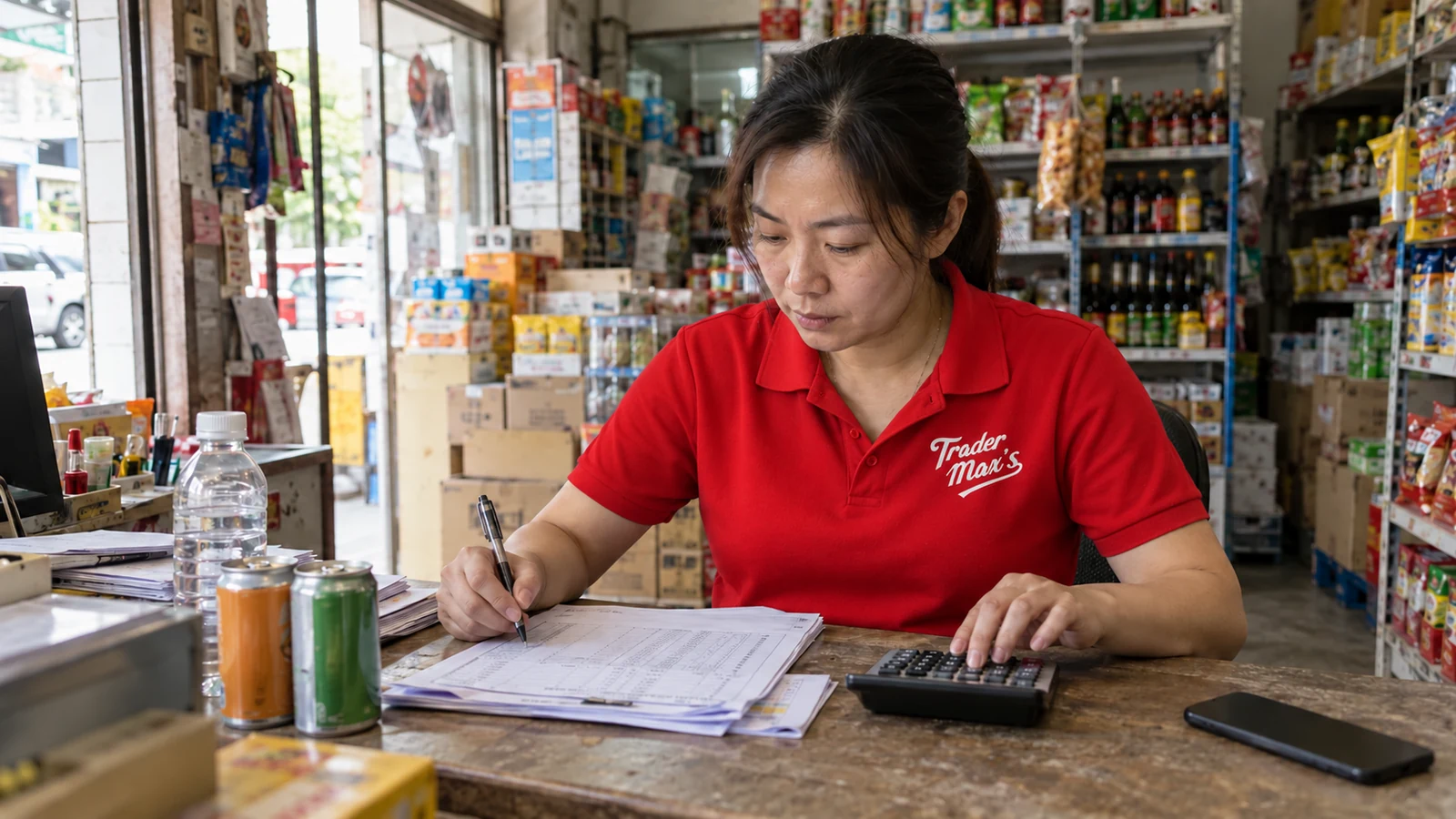
Cover: an AI-generated illustrative scene of quotation planning with Trader Max branding. The person and shop are fictional, not a photograph of an actual Trader Max employee or premises.


Leave A Comment