
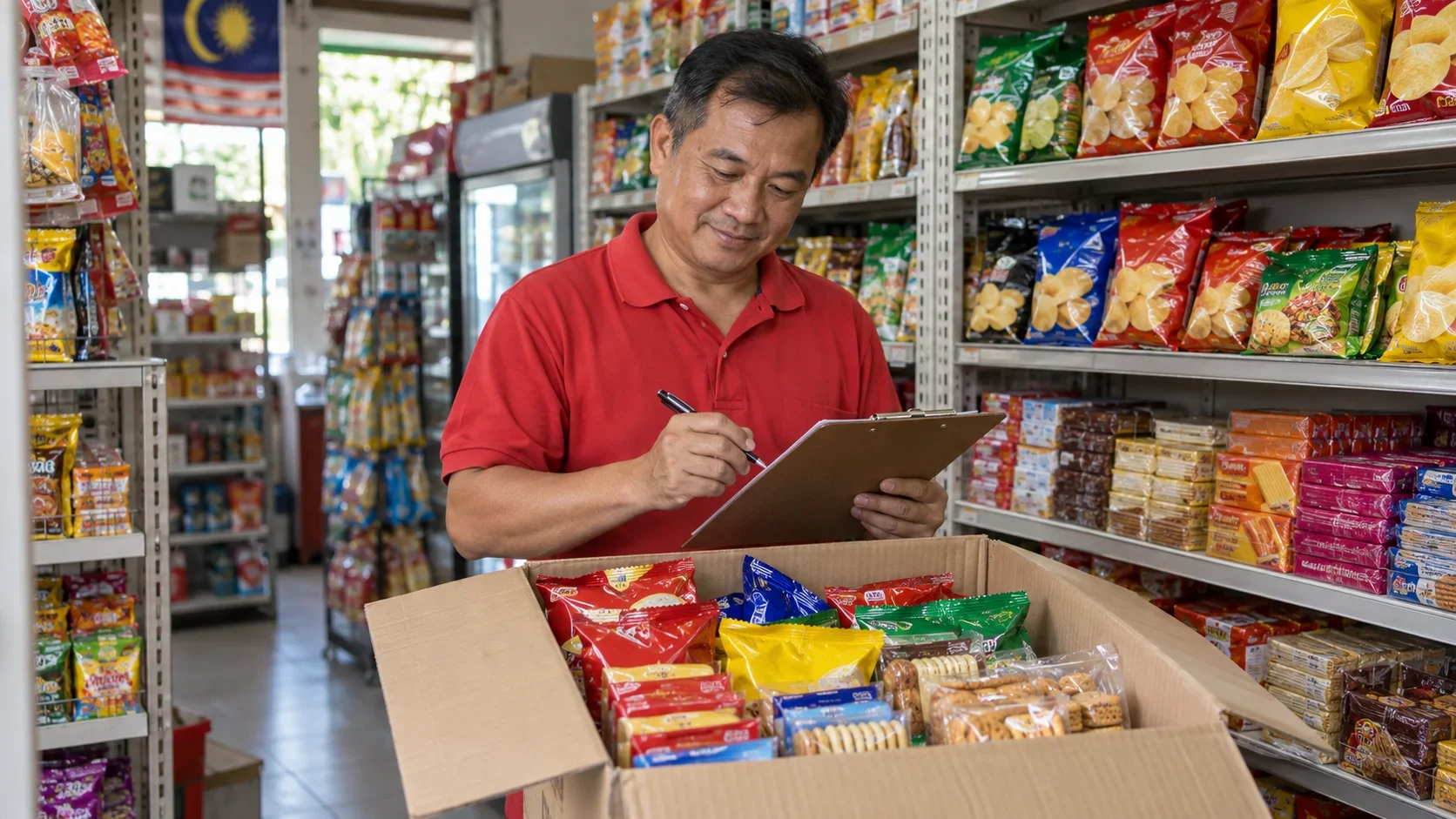
Buying wholesale snacks in Malaysia starts with a simple question: what will your customers buy again next week? A full snack shelf can look impressive, but every carton also takes up space and ties up cash. The aim is to build a range that suits your shoppers, sells steadily and stays easy to replenish.
This guide helps mini market, kedai runcit and convenience store owners plan their snack selection, compare pack sizes, calculate costs and manage stock. Whether you are opening a new shop or improving an existing aisle, start with a manageable range and let your own sales records guide the next order.
Choose wholesale snacks for your customers
Before looking through a supplier catalogue, consider who visits your shop and why. A neighbourhood store may need small packs for individual purchases alongside sharing packs for households. A shop serving office workers may want to test biscuits, crackers and convenient snacks for break time.
These are starting ideas, not guaranteed bestsellers. Ask regular customers what they cannot find, record repeated requests and review which products actually leave the shelf. A popular product elsewhere may move slowly in your location.
Set a budget for your first order and keep some cash available for replenishment. Buying a little of a new flavour gives you room to learn. Once you know which products sell consistently, you can increase quantities with more confidence.
Build a balanced snack range
You do not need every brand or flavour to offer a useful selection. Begin with a few clear categories, then compare their sales over the same period.
Savoury snacks and crackers
Consider a mix of crisps, corn snacks and flavoured crackers. Choose distinct options rather than filling a small shelf with many similar flavours. Compare the pack weight, selling price and carton quantity for each item.
For a catalogue example, see Bika Chicken Flavoured Crackers 60g. The listing describes a 60g × 10 pieces × 6 bags format. Confirm the current packing arrangement and order unit before placing an order.
Biscuits and wafers
Biscuits and wafers can give shoppers a choice between a small snack and a pack to take home. Check whether the outer pack contains individually wrapped portions and whether those portions are intended for separate retail sale. Plan your shelf labels around the unit you will actually sell.
Sweets, mints and confectionery
Small confectionery packs are worth testing in a tidy checkout display. Keep prices visible and avoid crowding the counter. For heat-sensitive products, follow the storage instructions and check that your shop can maintain the required conditions.
Sharing packs and trial products
Larger packs serve a different purchase occasion from single portions. Give them a defined space and review their turnover separately. Keep unfamiliar products in a small trial allocation so they do not displace reliable sellers before proving themselves.
Understand carton sizes before comparing prices
A lower carton price does not automatically mean a lower cost per retail pack. Suppliers may quote by carton, inner bag, display box or individual unit. Two listings with similar names can also contain different weights or quantities.
For each quotation, confirm these details:
- The exact brand, flavour and pack weight.
- The number of retail packs per inner bag or box.
- The number of inner bags or boxes per carton.
- The unit covered by the quoted price.
- Any delivery charge or other applicable charge.
- The available best-before or expiry dates.
For example, if a carton contains six inner bags and each bag holds ten retail packs, it contains 60 packs. Divide the total relevant cost by 60 when comparing the cost per pack. Do not divide by six unless you intend to sell each entire inner bag as one unit.
Calculate the cost and gross margin per pack
Use landed cost to compare wholesale snacks: the purchase cost plus delivery and other relevant charges allocated to the stock. If one delivery contains several products, apply a consistent method for sharing that delivery cost between them.
Illustrative example only: suppose 60 retail packs cost RM90, with RM6 in allocated delivery charges. The total landed cost is RM96, or RM1.60 per pack. If every pack sells for RM2.00, the gross profit is RM0.40 per pack.
- Gross margin: RM0.40 ÷ RM2.00 × 100 = 20%.
- Markup on cost: RM0.40 ÷ RM1.60 × 100 = 25%.
These figures are an example, not a Trader Max’s quotation or a recommended selling price. Gross profit also has to contribute towards rent, wages, payment fees, losses and other operating expenses. A product with a high margin may still contribute little if it rarely sells.
Review both the profit per pack and the number of packs sold. Include markdowns, damaged stock and unsold units when assessing the result of a promotion.
Check remaining shelf life and storage needs
Ask about dates before accepting a large order, especially for an unfamiliar product. Compare the remaining shelf life with how long you expect to take to sell the carton. Allow room for slower weeks rather than planning around your busiest day.
For instance, 60 packs selling at five packs a week represent about 12 weeks of stock. That estimate assumes demand stays steady. It should prompt a closer look at the product dates and order quantity, not an automatic decision to buy.
When stock arrives, check quantities, packaging condition and date markings against the order. Record any issue promptly and follow the supplier’s agreed reporting process. Keep invoices and batch details where your team can find them.
Rotate stock by the earliest relevant date, placing those packs where staff will pick them first. Follow the label’s storage instructions, protect cartons from moisture and direct sunlight, and avoid crushing light snack packs under heavier goods.
Set a simple reorder routine
Count both shelf stock and backroom stock before ordering. A shelf can look empty while an unopened carton sits behind other products. A basic spreadsheet or stock notebook is enough to start, provided the counts stay current.
Track the product name, units on hand, average weekly sales, supplier lead time, incoming orders and nearest date marking. Use several ordinary weeks of sales where possible, and note promotions or closures that distort the average.
A simple reorder point is expected sales during the supplier’s lead time plus a small buffer. If you normally sell 20 packs a week, delivery takes one week and you choose a ten-pack buffer, your starting reorder point is 30 packs. Adjust the buffer when actual demand or delivery timing changes.
The reorder point tells you when to act; the order quantity depends on carton size, shelf life, storage space and your next planned review. Check outstanding orders before adding more stock.
Make your snack display easy to shop
Group similar products together and show a clear price for each retail unit. Give reliable sellers enough space to stay visible between replenishment checks. Place small trial quantities where shoppers can notice them, then compare their performance with the space they occupy.
You can also test a snack display near relevant drinks without blocking aisles or access. If you are planning both categories together, read our wholesale beverages buying guide for retailers in Selangor.
When testing a bundle, calculate the combined cost before setting the offer price. Record whether the offer improves total gross profit and clears stock at a sensible rate. Higher sales volume alone does not show whether the offer worked.
What to ask a wholesale snack supplier
A clear quotation helps you plan beyond the first purchase. Before confirming your order, ask about minimum quantities, mixed-carton options, delivery coverage, lead times and payment terms. Confirm how shortages, damaged packs and date-related concerns are handled.
Request the exact product and pack details in writing so your team can receive and price the stock correctly. If an item is unavailable, agree on a substitute before dispatch rather than assuming a different flavour or size will suit your customers.
For a broader supplier checklist, see how to choose a mini market supplier in Malaysia.
Frequently asked questions about wholesale snacks in Malaysia
Which snacks should a new mini market stock first?
Start with a focused selection across savoury snacks, biscuits, wafers and confectionery, based on your likely customers and available storage. Test small quantities where the supplier allows it. Expand the products that earn repeat purchases in your own shop.
How many cartons should I buy?
Base the quantity on expected sales, remaining shelf life, carton size and replenishment timing. For a new item without sales history, a smaller trial order can help you avoid tying up too much cash. Ask whether smaller order units are available.
Is the cheapest carton always the best choice?
No. Compare cost per sellable unit, pack weight, delivery charges, product dates and likely turnover. A cheaper carton can become an expensive purchase if too much of it remains unsold.
Can I mix flavours in one carton?
This depends on the supplier and product. Some cartons contain one flavour only. Confirm whether a mixed carton is available, how many packs it contains and whether its price differs before ordering.
How often should I review my snack range?
Start with a weekly check of stock levels and dates, then review the broader range monthly. Increase checks for fast sellers or products approaching their date markings. Use the results to replenish, reduce or replace items.
Plan your next snack order with Trader Max’s
Ready to build your shortlist? Browse the Trader Max’s wholesale catalogue and note the products, pack sizes and quantities you want to discuss.
Contact Trader Max’s on WhatsApp with your shop location and proposed order. Ask the team to confirm current snack availability, carton configurations, pricing, product dates and delivery arrangements. A clear shortlist makes it easier to compare your options and prepare an order that fits your shop.

Leave A Comment