
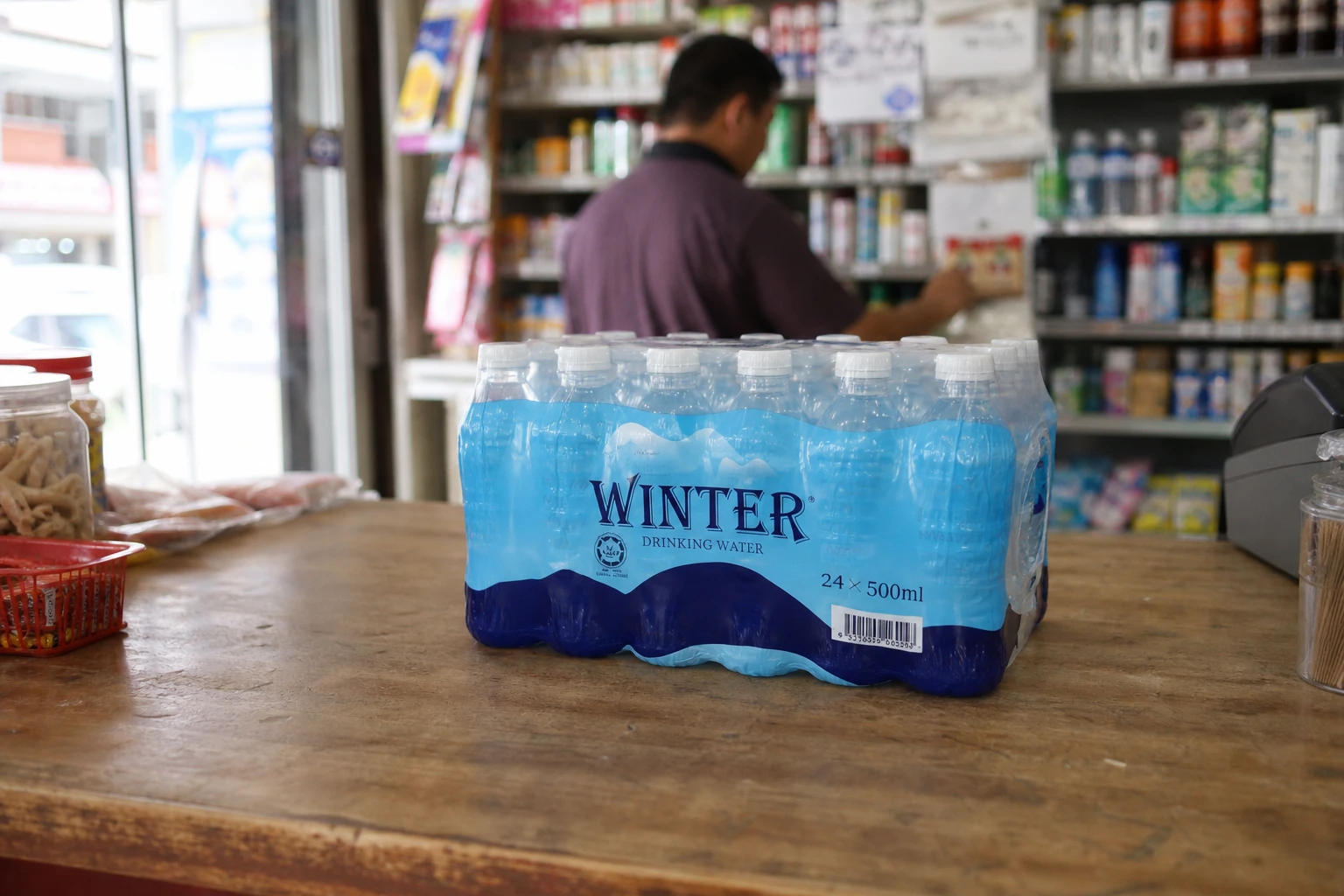
A convenience store supplier Klang Valley operators can work with for beverages and snacks is typically identified by browsing a published product catalogue and making direct contact to confirm what is actually available, rather than assuming stock or pricing in advance. In this case, the available verified reference points are a product enquiry catalogue at tradermaxs.com.my/shop/ and a contact page at tradermaxs.com.my/were-here/. No specific prices, stock levels, delivery coverage, discounts or certifications have been verified for this channel, so any sourcing decision should begin with direct enquiry through those channels rather than relying on assumptions about what a supplier carries.
Why This Channel Is Different from General FMCG Wholesale Buying
Convenience stores and petrol marts operate under different pressures than general retailers, cafés or restaurants. Footfall is high but dwell time is short, shelf space is limited, and customers expect to find familiar beverage and snack categories within seconds of walking in. This changes what “the right supplier” means for this channel specifically. A supplier evaluated for a sit-down café or a general grocery retailer is not necessarily evaluated the same way by a petrol mart operator who needs predictable replenishment of a narrow set of high-turnover SKUs rather than a broad, slow-moving range. Readers looking for a broader buyer’s guide covering wholesale FMCG sourcing across retail formats more generally may find our existing FMCG Wholesale Distributor in Klang Valley article a useful companion piece to this one.
Because no topic-specific stock or pricing facts have been verified for this guide, the practical starting point for any operator is the same regardless of outlet size: confirm directly with the supplier what categories and formats are actually available before building a stocking plan around them. The catalogue link and contact page noted above are the verified entry points for that enquiry process.
Core Categories to Stock: Beverages, Snacks and Instant Food
High-footfall convenience stores and petrol marts generally organise their offer around a small number of recognisable categories rather than a sprawling product range. Energy and isotonic drinks, carbonated soft drinks, bottled water, ready-to-drink tea and coffee, packaged snacks such as chips and biscuits, confectionery, and instant or grab-and-go food items are the broad categories that typically make up the bulk of counter and chiller space in this channel. These categories are mentioned here only as general examples of the kinds of products this channel commonly stocks, not as a confirmed list of what any specific supplier currently carries.
Within beverages, operators commonly separate chilled, ready-to-drink stock from ambient stock that can sit on a dry shelf until moved to a chiller closer to sale. Energy drinks and isotonic beverages are frequently positioned near the counter for impulse purchase, while larger-format water and soft drinks may sit in a standing chiller further into the store. Readers wanting a closer look at sourcing considerations specific to one well-known energy drink category may find our Red Bull Wholesale Supplier Malaysia article useful as a category-specific reference, though it should be read as a separate article rather than confirmation of current stock for this guide.
Snacks in this channel are typically chosen for individual, grab-and-go formats rather than family-size sharing packs, since the buying behaviour at a petrol mart counter or convenience store tends to be a quick single-item decision rather than a planned grocery trip. Instant food — cup noodles, ready-to-eat rice bowls, and similar items — rounds out the offer for customers looking for something more substantial than a snack but who are not visiting a full restaurant. Any brand names an operator may already associate with these categories, such as well-known energy drink, isotonic, soft drink, biscuit or confectionery brands, should be treated as general category references only; this guide does not confirm which specific brands or SKUs are currently available through any supplier, and operators should verify current availability directly before building a stocking plan around a specific brand name.
For operators building a first stocking list, it can help to browse a general category index, such as the Beverages and Snacks sections of a supplier’s catalogue, purely to understand the breadth of formats available before narrowing down to a specific order. This is a research step, not a commitment — the next step is always to confirm specifics directly with the supplier.
What High-Footfall Outlets Need to Confirm Before Ordering
Intended Outlet Use
Before approaching any supplier, it helps to be clear internally about how the stock will actually be used. A petrol mart counter display, a convenience store chiller, and a snack aisle endcap all have different turnover expectations and different physical constraints. Operators should define, before making enquiries, roughly how many SKUs they intend to carry per category, what their chiller or shelf capacity looks like, and whether the stock is meant for walk-in retail sale, bundled promotions, or counter impulse placement. This internal clarity makes supplier conversations faster and more specific, because the buyer can describe exact use-case needs rather than asking generic “what do you have” questions.
Product Identification
When a supplier catalogue is reviewed — such as the one at tradermaxs.com.my/shop/ — operators should treat the listing as a starting point for enquiry rather than a confirmed stock sheet. Product identification at this stage means noting down the exact product name, pack format description, and category as shown, then raising a direct question with the supplier about current availability, because online catalogues can lag behind actual warehouse stock. This is especially relevant for high-footfall outlets, where a stockout on a listed item translates directly into lost counter sales during peak hours.
Label Information Operators Should Check
For any beverage or snack product being considered for resale, the physical label and packaging remain the authoritative source of information — not marketing copy or catalogue descriptions. Operators should check, on the actual product or its outer carton, details such as net weight or volume, the manufacturer or brand owner name, and any storage instructions printed by the manufacturer. It is worth noting that a brand’s country of origin is not necessarily the same as the country where a specific carton or batch was manufactured or packed — a brand may be internationally recognised while an individual shipment is packed at a particular facility stated on that carton. Operators should check the printed label or carton on the specific stock received to confirm manufacturing origin, rather than assuming it based on the brand’s general reputation or where the brand is commonly associated with. Because no certifications, nutritional claims or shelf-life figures have been verified for specific products in this guide, operators should treat label verification as a task to complete with each physical shipment received, not as something to assume based on a product’s category or brand reputation. This is a matter of basic commercial diligence rather than a food safety disclaimer — it simply ensures the operator knows exactly what they are reselling.
Balancing Fast-Moving SKUs with Limited Shelf Space
The core operational challenge for a high-footfall convenience store or petrol mart is not finding products to stock — it is deciding which of many possible SKUs deserve a limited number of shelf facings or chiller slots. Unlike a larger supermarket format, a typical convenience counter has no real capacity to carry slow-moving stock “just in case” a customer asks for it. Every facing given to an unproven item is a facing taken away from something with demonstrated turnover.
A practical way to approach this is to rank existing or candidate SKUs by observed sell-through speed within each category, rather than by personal preference or supplier recommendation alone. Fast-moving beverages — the ones that sell out first in a chiller — generally deserve the most visible, easiest-to-reach positions, while slower-moving or newly trialled items belong in secondary positions until they have proven themselves over a trial period (see the stock trial approach discussed later in this guide). The same logic applies to snacks: a narrow set of consistently reordered items usually performs better for a small-format outlet than a wide range of rarely reordered ones.
This also affects how an operator should approach a supplier’s full catalogue. A catalogue may list a wide range of beverages, snacks and instant food options, but a high-footfall outlet with a single chiller and a small counter display does not need to stock all of them. The more useful exercise is identifying, category by category, the two or three formats most likely to move quickly given the specific outlet’s customer base — fuel-stop travellers, office workers, students — and starting there, rather than attempting to mirror a larger retailer’s full range.
Decision Checklist for Choosing a Convenience Store Supplier
Given the absence of verified pricing, delivery or stock-level facts for this specific channel, the most useful tool for an operator is a structured set of questions to put directly to any prospective supplier before committing to an order. The following checklist is designed for enquiry purposes — to be used when contacting a supplier through a channel such as the contact page at tradermaxs.com.my/were-here/ — rather than as a list of claims already confirmed.
- Category range: Does the supplier’s catalogue cover both beverages and snacks relevant to counter and chiller placement, or only one category? Ask for a current list rather than relying on older catalogue screenshots.
- Format suitability: Are products available in formats suited to single-unit retail resale (individual cans, bottles, single-serve snack packs), or only in bulk case packs meant for repackaging? This affects how stock fits a convenience store shelf versus a back-of-house storeroom.
- Minimum order expectations: What is the minimum quantity per SKU or per order the supplier requires? This is not publicly verified and must be asked directly, since it materially affects whether a small single-outlet operator can order economically compared to a multi-outlet chain.
- Replenishment cadence: How frequently can orders be placed and fulfilled? High-footfall outlets depend on predictable restocking cycles, so this should be clarified in writing rather than assumed from a first order.
- Communication channel: Is there a dedicated contact for repeat wholesale enquiries, or does every order require starting a new enquiry from scratch? Operators should ask this directly when first making contact.
- Product documentation: Can the supplier provide or confirm label details, manufacturer information, and pack specifications for the specific SKUs being ordered, ahead of the first delivery?
- Order confirmation process: How does the supplier confirm order quantities, item substitutions (if a listed item is unavailable), and expected fulfilment before dispatch?
Working through this checklist during the first few enquiries — rather than after an order has already gone wrong — gives an operator a clearer picture of whether a given supplier fits the specific demands of a high-footfall outlet. Because formal pricing, delivery coverage and stock-level data are not part of the verified facts for this topic, every one of these points needs to be confirmed directly with the supplier for the specific SKUs and quantities an operator intends to order, rather than inferred from general FMCG wholesale norms.
This distinction matters because convenience store and petrol mart buying decisions are driven by shelf turnover speed and counter visibility far more than by bulk discount structures, which tend to matter more to cafés, restaurants or larger retail formats. An operator sourcing for a single petrol mart counter has a very different checklist priority order than a multi-outlet convenience chain managing central distribution — and both should treat direct supplier enquiry, rather than assumption, as the starting point for any stocking decision.
Comparing Formats: Single-Unit Retail vs Bulk Case Packs
Beverage and snack products are generally manufactured in a small number of recognisable format types, and understanding the operational tradeoffs between them matters more than chasing a specific brand or price point. Two broad, clearly generic format categories are worth comparing here: single-unit retail-ready packs (a can, bottle or snack bag designed to be placed directly on a shelf or in a chiller) and bulk case packs (a carton containing multiple units, intended for storage or repackaging before sale). No specific pack sizes, counts or manufacturer specifications are verified for this guide, so the comparison below is kept at the level of general operational tradeoffs rather than confirmed product data.
Single-unit retail-ready formats reduce the labour needed at the point of sale, since staff can move stock straight from a delivery box to the shelf or chiller without repackaging. This suits high-footfall outlets where staff time during peak hours is scarce. The tradeoff is that retail-ready formats often occupy more storage volume per unit sold, since each item is individually packaged, which can strain a small backroom or under-counter storage area.
Bulk case packs, by contrast, are typically more storage-efficient per unit and may suit outlets with a dedicated storeroom or those supplying multiple counters from one back-of-house stock point. The tradeoff is added staff time to break down cases into shelf-ready quantities, and a need for clear internal stock rotation practice so older cases are not left at the back while newer deliveries are placed at the front. For a single petrol mart counter with limited backroom space, this tradeoff can outweigh any storage efficiency gained from ordering in bulk case format.
Neither format is inherently better; the right choice depends on the outlet’s physical layout, staffing pattern, and how quickly a given SKU is expected to turn over. An operator should ask a prospective supplier directly which formats are actually available for the specific products under consideration, since format availability has not been verified for this guide and should not be assumed from general industry patterns.
Building a Quotation Comparison Worksheet
Because no pricing has been verified for this channel, the most useful preparation an operator can do is build a simple worksheet to compare quotations once they are received from one or more suppliers, rather than trying to estimate costs in advance. A practical worksheet should capture, for each SKU under consideration: the product name and format as quoted, the quoted unit price, the minimum order quantity attached to that price, any quoted delivery or handling charge, and the total landed cost per unit once all charges are divided across the order quantity.
Laying these fields side by side across two or more supplier quotations — even if only one supplier is ultimately used — helps an operator see clearly where cost differences come from: unit price, order quantity thresholds, or delivery charges layered on top. This is a sourcing discipline that applies regardless of which specific supplier is contacted, and it is particularly useful for high-footfall outlets comparing beverage and snack categories that may have very different margin structures.
Illustrative Worksheet Example (Hypothetical Numbers Only)
The figures below are entirely illustrative, invented only to demonstrate how a comparison worksheet functions arithmetically. Every amount in this section is a hypothetical figure for demonstration purposes only — none are real prices, confirmed pack specifications, or quotations from any supplier, and none should be used as a reference point for actual purchasing decisions.
Hypothetical Example — Beverage SKU: Suppose (hypothetical figures only) a quotation lists a case of 24 units at a quoted case price of RM60.00, with a minimum order of 2 cases and a flat delivery charge of RM20.00 for the whole order. The hypothetical per-unit cost before delivery is RM60.00 ÷ 24 = RM2.50. Across 2 cases (48 units), the hypothetical goods cost is RM120.00, plus the RM20.00 delivery charge, giving a hypothetical total landed cost of RM140.00. Divided across 48 units, that is RM140.00 ÷ 48 = RM2.92 (hypothetical result) per unit landed cost — higher than the RM2.50 unit price quoted, because the delivery charge is spread across a relatively small order.
Hypothetical Example — Snack SKU: Suppose (hypothetical figures only) a second quotation lists a case of 12 units at RM36.00 per case, with a minimum order of 5 cases and the same flat RM20.00 delivery charge. The hypothetical per-unit cost before delivery is RM36.00 ÷ 12 = RM3.00. Across 5 cases (60 units), the hypothetical goods cost is RM180.00, plus RM20.00 delivery, giving a hypothetical RM200.00 total landed cost. Divided across 60 units, that is RM200.00 ÷ 60 = RM3.33 (hypothetical result) per unit landed cost.
This worked example shows why comparing only the quoted case price can be misleading: the hypothetical beverage SKU looked cheaper per unit at first glance (RM2.50 vs RM3.00), but once delivery and minimum order quantity are factored in, the gap narrows. An operator using a worksheet like this against real supplier quotations — not the invented figures above — can make a far more informed decision about which SKUs and order sizes actually fit their outlet’s budget and storage capacity.
Distinct Hypothetical Purchasing Scenarios
The following scenarios are hypothetical and intended only to illustrate how the decision checklist and worksheet above might be applied in practice. No supplier names, prices or stock positions are implied to be real.
Scenario A: Single Petrol Mart Counter
An operator running one petrol mart counter with a small chiller and limited backroom space is evaluating whether to order beverages in single-unit retail-ready format or bulk case packs. Given minimal storage, this operator would likely prioritise retail-ready formats even if the per-unit landed cost is slightly higher, because the labour and space saved from not having to break down cases matters more at this scale. Before ordering, this operator would ask a supplier directly about minimum order quantities per SKU, since committing to a large case minimum could tie up scarce storage space for slow-moving stock.
Scenario B: Multi-Outlet Convenience Chain
An operator managing several convenience store branches from a central storeroom is in a different position. Bulk case packs may suit this operator better, since cases can be broken down centrally and distributed to branches as retail-ready quantities, spreading the repackaging labour across a dedicated back-of-house team rather than individual counter staff. This operator would prioritise different checklist questions — particularly replenishment cadence and order confirmation process — since consistency across multiple outlets depends on predictable, repeatable ordering cycles rather than one-off purchases.
In both scenarios, the underlying step is the same: use the checklist and worksheet to frame specific questions, then confirm the answers directly with a supplier such as through the enquiry catalogue at tradermaxs.com.my/shop/ or the contact page at tradermaxs.com.my/were-here/, rather than assuming either format or cost structure in advance.
Running a Stock Trial Before Committing to Regular Orders
Before locking in a recurring order pattern with any supplier, it is worth treating the first one or two orders as a measured trial rather than a full commitment. A stock trial means ordering a small, deliberately limited quantity of a new SKU, placing it in its intended shelf or chiller position, and tracking how quickly it actually sells over a defined period — typically one to two weeks for a high-footfall outlet, since turnover should be visible quickly if the location and footfall genuinely support that category.
The measurement itself does not need to be complicated. A simple count at the start and end of the trial period, compared against the quantity received, gives a usable sell-through figure. If a chiller slot holding a beverage SKU sells through within the trial window and the operator is confident the pace will hold, that is a reasonable signal to continue ordering at a similar or slightly increased quantity. If the stock is still largely sitting on the shelf at the end of the trial, that is a clear signal to either reduce the next order, reposition the product to a more visible spot, or drop the SKU rather than let it consume shelf space that a faster-moving item could use.
This trial approach matters more for convenience store and petrol mart operators than for general retailers, because shelf space here is genuinely scarce and every slot given to a slow-moving SKU is a slot taken away from something with proven counter appeal. Running a trial before scaling an order also gives the operator real sell-through data to bring back to the supplier in any future conversation about adjusting order quantities or formats.
Keeping Receiving Records for Every Delivery
Each time stock arrives from a supplier, it is worth keeping a basic receiving record rather than simply shelving the delivery. A receiving record should note the date of delivery, the SKUs and quantities received, any discrepancy between what was ordered and what arrived, and the condition of the packaging on arrival. This record does not need to be elaborate — a simple logbook or spreadsheet entry is sufficient — but it becomes essential if a dispute arises later about short deliveries, damaged stock, or substituted items.
Receiving records also give an operator a factual basis for raising questions with a supplier, rather than relying on memory. If a particular SKU has arrived with inconsistent quantities across several deliveries, a written record makes that pattern easy to demonstrate when raising the issue through the supplier’s contact channel. For multi-outlet operators, consistent receiving records across branches also make it possible to compare whether delivery accuracy varies by location, which is useful information when planning future order volumes.
Reordering and Staff Handover
Once a stock trial has shown a SKU is worth continuing, the next practical step is building a simple reorder trigger — a minimum shelf or chiller quantity at which staff know to flag the item for reordering, rather than waiting until it has fully sold out. For a high-footfall outlet, a stockout on a proven fast-moving SKU during peak hours is a direct lost sale, so the reorder trigger should be set with enough lead time to cover the gap between placing an order and receiving it.
Staff handover is just as important as the reorder trigger itself. Where more than one staff member manages stock counts or shelf replenishment, it helps to keep a short written note — even a few lines — on which SKUs are currently on trial, which have a set reorder point, and which supplier contact to use for each category. This avoids a situation where a new or relief staff member either over-orders a slow-moving item or lets a fast-moving one run out because the reorder logic was only ever kept in one person’s memory.
A Short Note on Commercial Scope
This guide does not state or imply confirmed pricing, stock availability, delivery coverage, discount structures or certifications for any supplier or SKU, because none of these have been independently verified for this topic. Storage conditions for any given product should always be read from the pack or carton itself rather than assumed from this guide, and where printed instructions are unclear, the appropriate step is to raise the question directly with the supplier rather than guess. Every figure, format and scenario discussed above involving dollar amounts or quantities is explicitly hypothetical and intended only to illustrate a method of comparison. Any actual stocking decision should be based on current information obtained directly from a supplier, confirmed in writing where possible, rather than on assumptions drawn from this or any general buying guide.
Frequently Asked Questions
How do I know if a supplier can meet my outlet’s order frequency?
Ask directly rather than assume. Replenishment cadence is not standard across suppliers, so this should be confirmed in writing before committing to a regular order pattern, as covered earlier in the decision checklist.
What should I check when a delivery arrives?
Compare the delivery against your order, note any discrepancy in a receiving record, and check the packaging condition before placing stock into its shelf or chiller position.
How long should a stock trial run before deciding to reorder?
There is no fixed rule, but a short, defined window — commonly one to two weeks for a high-footfall outlet — gives enough time to see a clear sell-through pattern without tying up shelf space indefinitely on an unproven SKU.
Where do I find manufacturing origin and storage instructions for a specific product?
Check the printed label or outer carton on the specific stock received, not the brand’s general reputation or country association. The label is the authoritative source for manufacturing origin, net weight or volume, and storage instructions, and it should be checked with each shipment rather than assumed to be consistent across deliveries.
Starting a Supply Relationship with Trader Max’s
For operators ready to move from planning to direct enquiry, the practical next step is to review the product enquiry catalogue at tradermaxs.com.my/shop/, including its Beverages and Snacks sections, and raise specific questions — on formats, order quantities, replenishment cadence and storage requirements — through the contact page at tradermaxs.com.my/were-here/. Bringing a clear checklist and your outlet’s actual shelf and storage constraints to that first conversation will make it far easier to judge whether a given supplier fits a high-footfall convenience store or petrol mart operation.


Leave A Comment