
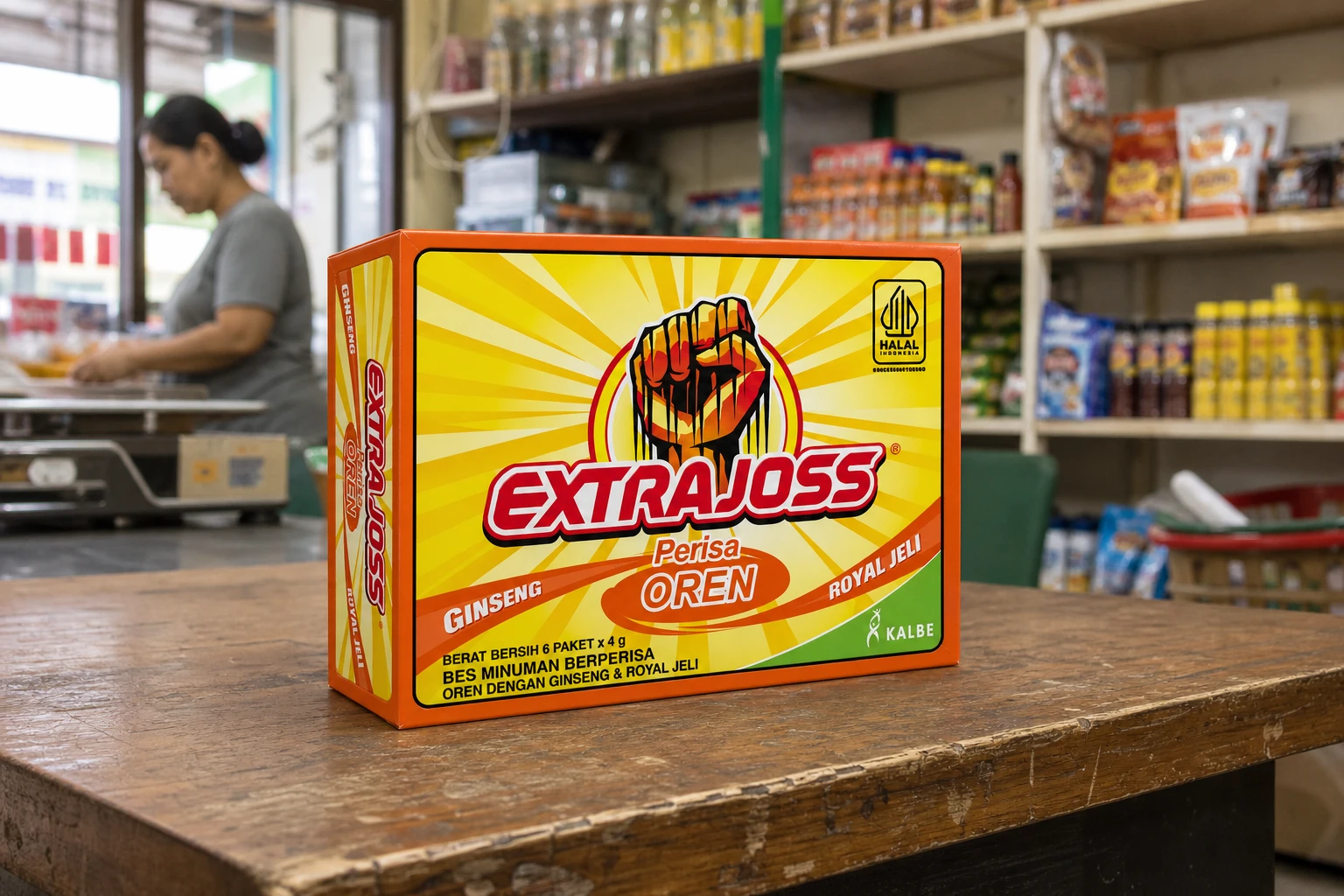
There is no verified, published extra joss oren carton price available at this time, since no topic-specific pricing, pack size, or stock information has been independently confirmed for this guide. What buyers can do instead is request a current quotation directly through a supplier’s product enquiry channel, such as the catalogue listing at tradermaxs.com.my/shop/, and confirm details in writing before placing an order. This article sets out the background context, product identification steps, and a decision checklist to help Malaysian wholesale buyers prepare a proper enquiry rather than rely on unverified figures found elsewhere online.
Background: Why Carton Price Queries Need Direct Verification
Energy drink products sold through wholesale and distributor channels in Malaysia typically have pricing that shifts based on order volume, promotional periods, and the specific distributor a buyer approaches. Because no specific price, carton configuration, or minimum order quantity for Extra Joss Oren has been verified for this guide, any number quoted without a direct supplier confirmation should be treated as provisional at best. Buyers researching this product should treat online price mentions, including those on marketplaces or forums, as unverified until checked against a current quotation.
The practical path forward is to submit an enquiry through a supplier’s official channel and request a written quotation that specifies the exact product, pack configuration, and price per carton. This approach protects the buyer from relying on outdated or third-party figures that may not reflect current terms.
Who This Guide Is For: Matching Purchase to Outlet Type
Before requesting a quotation, it helps to be clear about the intended outlet use, since this affects how a buyer should frame their enquiry and what order volumes make sense.
Mini Marts and Convenience Stores
Smaller retail outlets typically plan purchases around shelf space and turnover rate rather than maximum volume discounts. If you run a mini mart, your enquiry should specify your typical restocking frequency so a distributor can suggest an appropriate order size, rather than defaulting to the largest carton configuration available.
Sundry Shops and Provision Stores
Traditional sundry shops often carry a narrower range of SKUs per brand but need consistent restocking. When enquiring, state whether you need a single flavour variant or a mixed-carton arrangement, since not all suppliers offer mixed packing and this detail affects the quotation you receive.
Canteens, Mess Halls, and Institutional Buyers
Buyers purchasing for canteens or staff pantries may have different volume needs than retail resellers. If your purchase is for internal consumption rather than resale, mention this in your enquiry, as it may affect which pricing tier or packaging format a supplier recommends.
Event Organisers and Temporary Vendors
For short-term needs such as events or pop-up stalls, confirm whether the supplier accepts smaller one-off orders or whether they only quote standard wholesale carton quantities. This should be clarified before assuming a bulk price applies to a small, one-time purchase.
Product Identification: What to Confirm Before Ordering
Energy drink products often come in multiple variants, and brand names alone do not guarantee you are ordering the exact product your customers expect. Before finalising any order, confirm the following details directly with the supplier or distributor:
- Exact product name and flavour variant as printed on the packaging
- Net volume per unit (for example, per can or bottle, once confirmed by the supplier)
- Number of units per carton, since this is not standardised across all energy drink brands
- Country where the specific carton you are purchasing was manufactured or imported from, if relevant to your retail licensing requirements
- Manufacturing and expiry date ranges for the batch being offered
A brand’s country of origin and the manufacturing country of a specific carton are not always the same thing, since some brands are produced under licence or at different facilities depending on the market being supplied. Rather than assuming either, check the printed label on the actual carton you are quoted for this information, and ask the supplier to confirm it in writing if the label is unclear. None of these specifics have been independently verified for this guide, which is precisely why direct confirmation matters. A buyer who orders based on assumptions about pack size or variant risks receiving stock that does not match what was expected, creating downstream problems with customer expectations or shelf planning.
Reading the Label: What to Check on Arrival
Once a shipment arrives, checking the label against what was quoted is a basic but often skipped step. Malaysian retailers should verify:
Product name and variant match. Confirm the label matches exactly what was listed in the quotation or invoice, including any flavour or formulation naming.
Manufacturing date and best-before date. Record both dates against the delivery date so you can track shelf life from the point of receiving, rather than assuming freshness.
Carton count versus invoice quantity. Count the number of units physically received against what the invoice states, since discrepancies are easier to resolve immediately than after the stock has been shelved or distributed.
Language and labelling compliance. Malaysian retail regulations generally expect certain label information to be present in a readable format; buyers should check this against their own regulatory understanding or consult the relevant authority if uncertain, since this guide does not confirm specific compliance standards for this product.
Packaging condition. Check for dents, leaks, or damaged cartons on arrival and document any issues with photos before accepting the delivery as complete.
Decision Checklist Before Requesting a Quotation
Use the following checklist to prepare a clear, specific enquiry that is more likely to get a useful and fast response from a distributor:
- Define your outlet type and purpose. State whether the stock is for resale, internal use, or event purposes.
- Estimate your order frequency. Decide whether you need a one-off order or a recurring supply arrangement, as this may affect the pricing conversation.
- Identify the exact product variant you want. Specify “Extra Joss Oren” precisely rather than a general product category, to avoid confusion with other flavours or related products.
- Ask for carton configuration details. Request confirmation of units per carton before assuming a standard pack size.
- Request price per carton and any volume-based tiers. Ask explicitly whether price changes at higher order volumes, since this is not something to assume from a single quoted figure.
- Clarify delivery logistics. Ask about delivery coverage area, estimated lead time, and any minimum order value tied to delivery, since none of these specifics are addressed in this guide.
- Request documentation. Ask for a formal invoice or delivery order that specifies product name, quantity, and date of manufacture for your own stock records.
- Confirm return or exchange terms. Ask what happens if stock arrives damaged or does not match the order before you commit to payment.
Buyers who work through this checklist before contacting a distributor tend to receive clearer, faster quotations because the supplier is not left guessing about order size, frequency, or intended use. The enquiry catalogue at tradermaxs.com.my/shop/ is one channel where Malaysian buyers can submit this kind of detailed request, and the contact page at tradermaxs.com.my/were-here/ provides a way to follow up directly with questions not answered through the catalogue listing itself.
Comparing Pack Formats: What “Carton” Can Mean
Energy drink cartons are not standardised across brands, and without a manufacturer-confirmed specification for Extra Joss Oren, buyers should avoid assuming a particular carton holds a fixed number of cans or bottles. Some energy drink lines are packed in smaller inner trays bundled into an outer case, while others are sold as a single uniform carton. Until a supplier confirms the actual configuration for this product, treat the word “carton” as a placeholder term to clarify in your enquiry, not a fixed unit you can price-compare across sources.
This matters operationally because two quotations that look similar on price per carton may actually represent very different unit counts. A buyer comparing offers needs to normalise everything to a common unit, such as price per can or bottle, before judging which offer is better value. The table and scenarios below illustrate this approach using clearly labelled hypothetical figures only.
Generic Comparison: Smaller Case vs Larger Case
Separate from any brand-specific claim, it is common in the general wholesale beverage trade for suppliers to offer a smaller case format alongside a larger case format, with the larger format often priced to reward bulk commitment. The operational tradeoff is straightforward: a smaller case format ties up less capital and storage space but may carry a higher per-unit cost, while a larger case format usually lowers per-unit cost but increases the capital tied up in one delivery and the shelf or storeroom space needed to hold it.
For a mini mart with limited back-of-store space, committing to a larger case format purely to chase a lower unit price can backfire if the stock sits too long before selling through, especially if shelf rotation or space constraints become a problem. For a higher-turnover sundry shop or canteen supplier, the larger format may make more practical sense because the stock moves quickly regardless of size.
Hypothetical Purchasing Scenarios
The table below uses clearly invented numbers, labelled hypothetical throughout, to illustrate how a buyer might reason through a decision. None of these figures are real prices, real pack sizes, or confirmed specifications for Extra Joss Oren. They are provided only to demonstrate a method of comparison that a buyer can apply once real quotations are received.
| Scenario | Hypothetical Case Size | Hypothetical Total Price | Hypothetical Price Per Unit (calculated) |
|---|---|---|---|
| Scenario One, Option A: small mini mart, smaller case | 24 units | RM48 (hypothetical) | RM2.00 per unit (hypothetical, RM48 ÷ 24 = RM2.00) |
| Scenario One, Option B: small mini mart, larger case | 48 units | RM88 (hypothetical) | RM1.83 per unit (hypothetical, RM88 ÷ 48 = RM1.83, rounded) |
| Scenario Two: canteen supplier, bulk pallet-equivalent | 1,000 units | RM1,600 (hypothetical) | RM1.60 per unit (hypothetical, RM1,600 ÷ 1,000 = RM1.60) |
| Scenario Three: event organiser, minimum order quoted | 500 units | RM850 (hypothetical) | RM1.70 per unit (hypothetical, RM850 ÷ 500 = RM1.70) |
Hypothetical Scenario One: Small Mini Mart Restocking
Suppose, purely as an illustration, a mini mart owner receives a quotation showing a smaller case at a hypothetical price of RM48 for 24 units, working out to a hypothetical RM2.00 per unit. A second hypothetical quotation offers a larger case at RM88 for 48 units, working out to a hypothetical RM1.83 per unit. On a pure unit-cost basis, the larger case appears cheaper by about 17 sen per unit in this hypothetical comparison. However, if the mini mart typically sells through only 20–25 units per month, doubling the order to chase the lower unit price means tying up almost two months of selling time in one delivery, with associated storage and capital considerations. In this illustration, the smaller case may still be the more sensible operational choice despite the higher hypothetical unit cost, because it matches actual turnover.
Hypothetical Scenario Two: Canteen Supplier with Steady Institutional Demand
Consider a second invented example: a canteen operator supplying several staff pantries receives a quotation for a bulk pallet-equivalent order at a hypothetical RM1,600 for 1,000 units, working out to a hypothetical RM1.60 per unit. If this buyer has confirmed, steady weekly demand across multiple sites, the larger volume commitment is more defensible because the stock will not sit idle. The key difference from Scenario One is not the hypothetical price itself, which is entirely invented for illustration, but the fact that confirmed, steady demand changes the calculation around whether a larger volume commitment makes sense.
Hypothetical Scenario Three: Event Organiser With a One-Time Need
As a third illustration, imagine an event organiser needing stock for a single two-day event, with an estimated requirement of around 150 units. If the only quotation available is structured around a minimum order of 500 units at a hypothetical RM1.70 per unit (hypothetical total RM850), the organiser faces a decision: order the full minimum and absorb the surplus, or look for a supplier willing to quote a smaller one-off order, possibly at a higher hypothetical per-unit price. This scenario highlights why it is worth asking directly whether a supplier accommodates smaller one-time orders, rather than assuming the standard wholesale carton price automatically applies to every buyer type.
In all three scenarios, the arithmetic is simple division of total price by total units, and buyers should always re-check this calculation themselves against any real quotation rather than trusting a quoted per-unit figure without verification.
Building a Quotation Comparison Worksheet
When real quotations are eventually received from a supplier such as through the enquiry catalogue at tradermaxs.com.my/shop/, it helps to lay them out in a simple comparison format before deciding. A basic worksheet should capture, for each quotation received:
- Supplier name and date quotation was received
- Exact product name and variant confirmed
- Units per carton or case as stated by the supplier
- Total price quoted for that carton or case
- Calculated price per unit (total price divided by units, checked manually)
- Any stated minimum order quantity
- Any delivery charge mentioned, and whether it is included in the quoted price or added separately
- Validity period of the quotation, since prices quoted verbally or informally may not hold beyond a certain date
Filling in this worksheet for two or three competing quotations side by side makes it far easier to spot whether a lower headline carton price is actually a better deal once delivery charges, minimum order commitments, and unit counts are accounted for. A quotation with a lower carton price but a higher minimum order quantity may end up costing more in tied-up capital than a slightly higher-priced quotation with a lower minimum.
Operational Tradeoffs Beyond Price
Price per unit is only one factor in a wholesale decision. Buyers should also weigh:
Storage capacity and shelf life management. A larger order sitting in storage for longer periods needs proper stock rotation discipline to avoid older stock being pushed to the back indefinitely.
Cash flow timing. A larger bulk order ties up more capital upfront, which may not suit a buyer managing tight working capital, even if the per-unit price is objectively lower.
Flexibility to adjust future orders. Committing to a very large order based on an attractive unit price can reduce flexibility if customer demand shifts or a different flavour variant becomes more popular.
These tradeoffs apply generally across wholesale beverage purchasing and are not specific claims about Extra Joss Oren’s actual pricing structure. Once a buyer has a real quotation in hand, applying the worksheet above and weighing these operational factors against actual turnover data gives a far more reliable basis for a purchasing decision than comparing headline carton prices alone.
Running a Stock Trial Before Committing to a Full Order
Once a quotation has been reviewed using the worksheet approach above, it is worth testing demand with a smaller trial order before locking in a recurring supply arrangement. A stock trial is simply a deliberately limited first order, sized to let you observe actual sell-through speed rather than relying on assumptions carried over from a different product or brand.
To measure a trial properly, record the exact date stock is shelved, the starting quantity, and then check remaining quantity at fixed intervals, such as weekly. Dividing units sold by the number of days elapsed gives a rough daily sell-through rate that you can use to judge whether a future order size matches real demand. This measurement only works if the starting count is accurate, which is why the receiving checks described earlier matter before any trial begins.
A trial order also gives you a chance to observe customer response to this specific variant without overcommitting capital. If sell-through is slower than expected, you have a smaller surplus to manage rather than a large one tying up storage space and cash.
Receiving Records: What to Log Every Time
A simple, consistent receiving record protects a buyer far more than memory or verbal assurances from a delivery driver. For every delivery, whether a trial order or a repeat order, log the following in a dedicated stock-receiving sheet or basic spreadsheet:
- Delivery date and supplier name
- Invoice or delivery order number
- Product name and variant as printed on the carton
- Quantity ordered versus quantity received, counted physically
- Manufacturing date and best-before date as printed
- Any visible damage, noted with photos attached to the record
- Name of the staff member who received and checked the delivery
This record becomes especially useful if a dispute arises later about quantity, condition, or date discrepancies. It also builds a historical reference that helps with reordering decisions, since you can look back at how long a given quantity actually took to sell through, rather than guessing from memory.
Storage, Reordering, and Staff Handover Practices
Storage conditions for any beverage product should follow whatever instructions are printed on the actual packaging or carton, since this guide does not independently verify specific storage requirements for Extra Joss Oren. If no clear storage instruction is visible on the packaging you receive, raise this directly with the supplier as a question, rather than guessing, by asking what storage conditions the manufacturer specifies for the product. Separately, general warehousing practice for any carton goods includes keeping stock off direct floor contact, away from direct sunlight, and rotated so older stock is sold before newer stock, commonly described as first-in-first-out handling. These are general practices rather than claims specific to this product, and they do not replace whatever instruction is printed on the actual packaging.
Once a trial order has run its course and you have receiving records plus a sell-through rate, reordering becomes a calculation rather than a guess. Compare your recorded daily or weekly sell-through rate against your desired stock buffer, meaning how many days of stock you want on hand before the next delivery arrives, factoring in whatever lead time the supplier has indicated for a repeat order. If records show a variant moving faster than expected, it may justify scaling up to a larger case format, provided storage and cash flow can support it. If a variant is moving slowly, it may be worth holding at the smaller trial quantity for another cycle before considering a larger commitment.
In outlets with more than one staff member handling deliveries or stock checks, a receiving record is only useful if it is actually read and updated consistently across shifts. A short handover routine helps: whoever receives a delivery should briefly brief the next shift or leave a note covering quantity received, any discrepancies flagged, and where the new stock has been placed relative to older stock for rotation purposes. This matters particularly for buyers managing multiple SKUs across different suppliers, since relying purely on memory increases the risk of selling older stock out of sequence or missing a discrepancy that should have been raised with the supplier promptly after delivery.
Scope Note
This guide has not verified specific pricing, pack sizes, minimum order quantities, storage conditions, country-of-manufacture, or delivery terms for Extra Joss Oren, since no independent source confirming these details was available at the time of writing. All monetary figures used in the purchasing scenarios and table above were clearly invented for illustration only and are not quotes. Buyers should treat every commercial detail in this article as a starting point for questions to ask, not as confirmed fact, until a direct written quotation is obtained.
Frequently Asked Questions
Is there a fixed carton price for Extra Joss Oren that applies to all buyers?
No fixed, independently verified carton price exists for this guide. Pricing in wholesale beverage trade generally varies by volume, supplier, and timing, so a written quotation specific to your order is the only reliable source of a current price.
How many units are typically in a carton of this product?
This has not been independently verified for this article. Confirm the exact unit count directly with the supplier before comparing any quoted carton price against other offers.
Can I order a smaller quantity than the standard wholesale carton?
This depends entirely on the individual supplier’s terms, which have not been verified here. Ask directly whether smaller or trial quantities are available, particularly if you are testing demand for the first time.
Where can I check which country a specific carton was made in?
Check the printed label on the actual carton you are quoted for this information. If it is unclear or missing, ask the supplier to confirm the manufacturing or import origin in writing before ordering.
What should I do if a delivered carton does not match the quotation?
Document the discrepancy immediately with photos and a written note, referencing your invoice or delivery order number, and raise it with the supplier before accepting the delivery as complete.
Next Step: Request a Direct Quotation
To move from general guidance to an actual order, submit a specific enquiry covering product variant, intended carton size, and expected order frequency through the product enquiry catalogue at tradermaxs.com.my/shop/. If you have questions not answered through the catalogue listing, reach out directly via the contact page at tradermaxs.com.my/were-here/ to confirm current terms before placing your order.

Leave A Comment