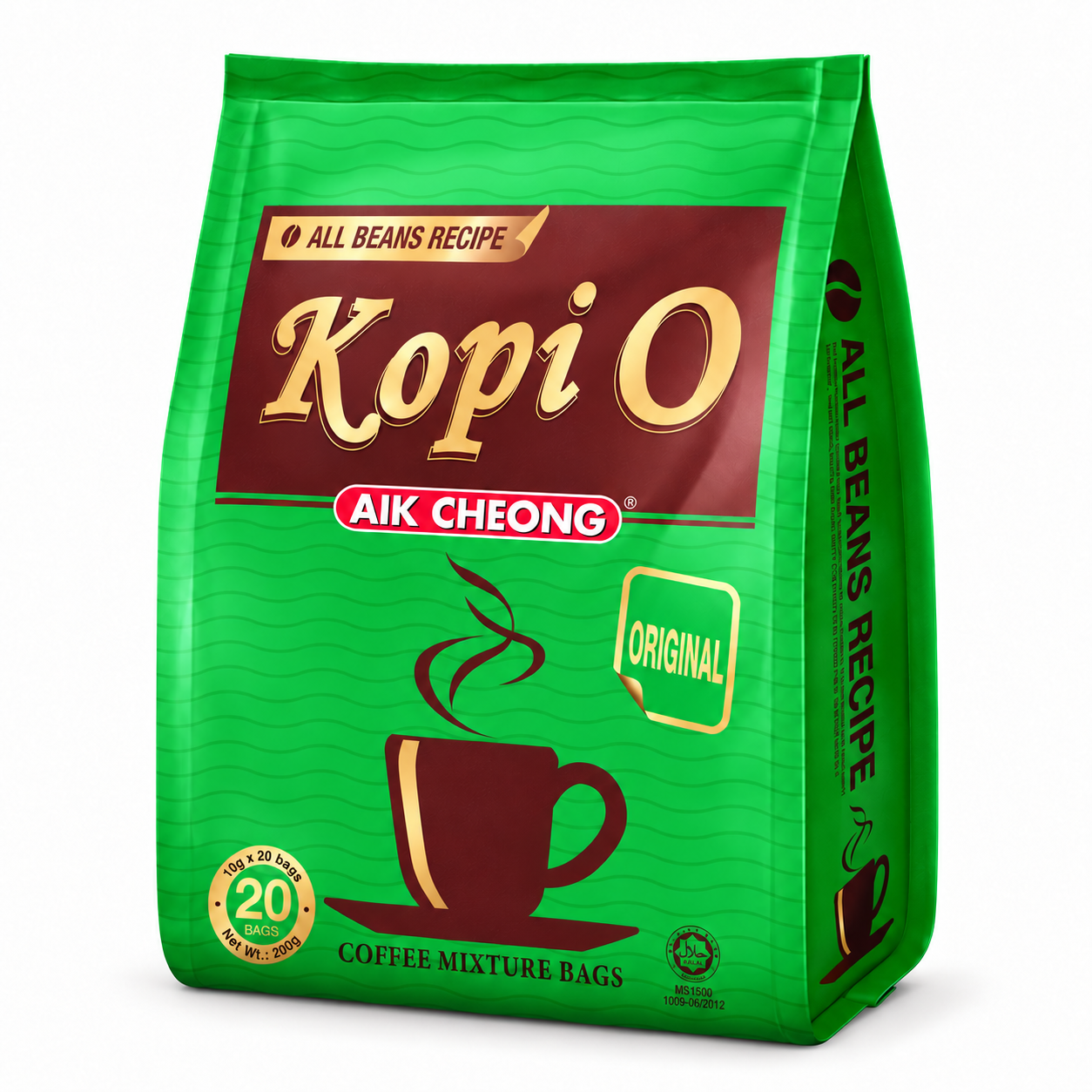
AIK CHEONG KOPI O BAG 24 X 20S X 10G
Contact us for current pricing and availability.

AIK CHEONG KOPI O BAG 24 X 20S X 10G
Contact us for current pricing and availability.
A dependable coffee order starts with recognising the exact pack your customers or colleagues want. AIK CHEONG KOPI O BAG 24 X 20S X 10G is the catalogue entry for SKU 231301014000. The pictured green retail pack carries the Original variant name and identifies coffee mixture bags. For Malaysian grocery buyers, provision shops and workplace purchasers, that combination of brand, variant and format gives this product a clear place on a buying list.
The practical appeal of a named Original option is straightforward: it provides a specific reference when someone asks for their usual Aik Cheong Kopi O. Rather than treating every coffee carrying the brand as interchangeable, buyers can keep this entry separate from Strong and Sugar Added choices. That precision matters when replenishing a shelf, preparing an enquiry or passing an order from one member of staff to another.
Start with the pack already being used or sold. Check the words Original, Kopi O and coffee mixture bags against the product photograph, then match the SKU in the order record. The image shows a retail pack marked 20 bags at 10g each. These details distinguish the photographed product from another variant with a different bag count or weight. They are more useful than remembering the pack colour alone.
Colour can be a handy visual cue at the shelf, but a written specification travels better between a shop owner, purchasing assistant and supplier. Use the complete catalogue name on the first enquiry. For later reorders, retain the SKU alongside the name so that the original selection stays clear even when staff change or a message is forwarded without the accompanying photograph.
The catalogue pack notation is 24 X 20S X 10G, while the listed selling unit is PCS. Those two pieces of information should be read together. The retail photograph illustrates a product pack; it does not, by itself, establish what quantity will be supplied for one ordered PCS. Confirm that mapping before translating a pantry requirement or shelf allocation into an order quantity.
This is especially important when a business normally buys similar products by carton. A familiar sequence of numbers can look like a complete carton breakdown, but the order should follow the supplier’s confirmed unit. Ask for the number of retail packs covered by the quoted selling unit, and keep that answer with the purchase record. Once established, the same reference can make subsequent enquiries much simpler.
A provision shop does not need every coffee variant to serve the same purpose. This Original entry can be considered for customers who request this particular Aik Cheong pack, while other variants remain separate choices. A concise shelf label that includes the variant and retail pack details helps shoppers identify what they came for without needing a long explanation from the counter.
For a wider beverage aisle, think about the buying decision from the customer’s side. Someone looking for coffee bags may scan differently from someone looking for another drink format. Grouping products by a clear, consistent store system can make comparison easier. Keep the actual product names visible, and avoid describing Original as equivalent to an unverified recipe, ingredient list or nutritional profile.
For an office pantry, the most useful starting point is the coffee people already choose. If staff ask specifically for this Original pack, record that preference separately from general coffee consumption. A single combined coffee total can hide the fact that one variant is requested frequently while another remains on the shelf. A simple record of packs issued can help a purchaser see that difference.
Estimate a new requirement from the number of people using the pantry, the period being covered and the recent pattern of replenishment. These are planning inputs, not promises about how many drinks this product will provide in every setting. Follow the pack’s own preparation directions when it is used. No fixed water quantity, brewing duration or serving yield is established by this catalogue description.
A coffee shelf can contain loose coffee, coffee bags and other drinks supplied in small portions. Similar-looking outer packs do not make those formats interchangeable. Here, the photograph explicitly identifies coffee mixture bags, and the Original pack specifies 20 bags at 10g each. Someone shopping for this format can use those details to distinguish it from a different product that happens to carry the same brand.
This is useful when a customer asks for coffee in sachets, a phrase that may leave the actual format unclear. Ask whether they mean the Original coffee bags shown here, then check the label rather than assuming that every individually portioned drink is prepared in the same way. A product-specific answer helps the customer find the intended coffee while leaving preparation details to the manufacturer’s directions on the current pack.
For a shop with limited space, a clearly identified coffee-bag option also gives the assortment a more deliberate structure. The buying decision becomes about a particular format and variant rather than simply adding another similar-looking coffee pack.
Consider a household shopping list that says Aik Cheong Original, followed by a supermarket visit where several Aik Cheong packs appear together. The green presentation is a visual clue; Original and the 20-bag, 10g reference make the identification precise. A retailer who displays those details clearly can help that shopper select the requested product without turning the choice into a claim that one coffee is best for everybody.
A different household may be exploring coffee bags for the first time. In that case, the useful questions are whether this is the format they want, whether Original is the variant they intended to try, and whether the current label answers their product questions. The name Kopi O should not be expanded into an assumed ingredient list or a promise about the finished drink.
For a shared kitchen with several coffee preferences, retaining the original product identification keeps each choice recognisable. The pack’s own directions remain the reference for preparation. This allows the Original option to be selected for what it actually is, with no need to attach an unverified flavour description or serving formula.
At receipt, check the delivered product identity against the agreed order before assigning it to a shelf or department. Match the variant wording, pack details and quantity rather than relying on a quick colour check. If a business handles several Aik Cheong coffees, keeping their records separate helps the person who receives the goods pass the right product to the right destination.
For a repeat enquiry, the essential reference is Aik Cheong Kopi O Bag, SKU 231301014000, with catalogue notation 24 X 20S X 10G. State the quantity required in the confirmed selling unit and identify any label details that need checking. This gives the supplier a clear request and gives the buyer a practical basis for maintaining an Original coffee option across everyday retail and workplace purchasing.


Reviews
There are no reviews yet.